
The complete UK buyer's guide to yew hedging (Taxus baccata)
If you’re planting a hedge for the long view — one your grandchildren will know — yew is the species. Taxus baccata has been used for formal hedges, topiary and boundary planting in Britain for over five hundred years, and a well-managed yew hedge can outlive the house it sits beside. It’s also the most architecturally satisfying evergreen hedge you can grow in the UK.
This guide covers what you actually need to know before ordering: which form to buy, when to plant, how to space it, how it compares to the alternatives, and the real trade-offs nobody mentions until you’ve made the commitment.
What is English yew?
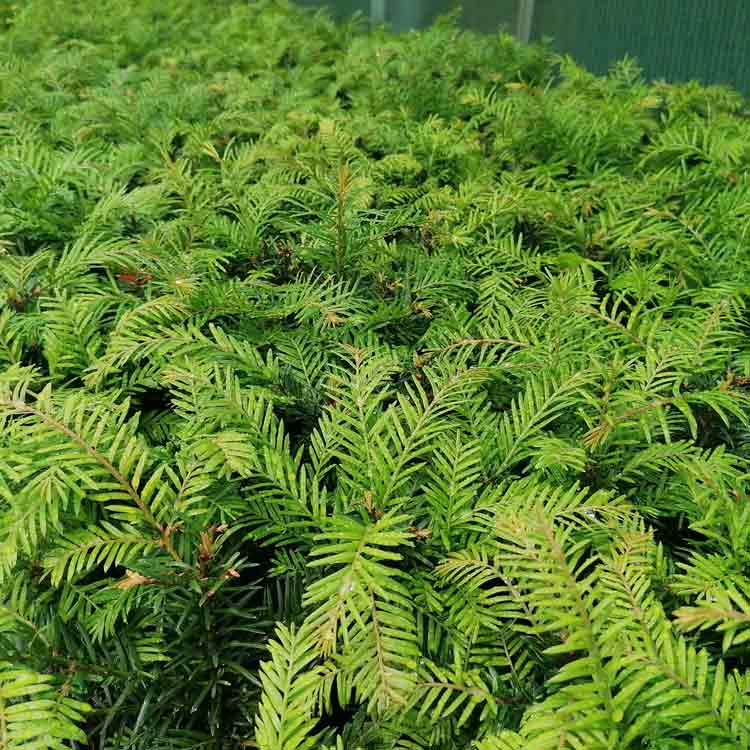
Taxus baccata — English yew or common yew — is a native British conifer, an evergreen with dark green needle-like foliage and a slow, dense growth habit that takes formal shaping beautifully. It’s the hedge plant of churchyards, country estates and formal gardens. Cathedral closes and topiary gardens lean on it because nothing else gives the same depth of dark green or holds a sharp shape so cleanly.
The species naturally grows into a small to medium-sized tree, but as a hedge it’s content to be kept at almost any height from 60cm to 4 metres or more. It tolerates hard pruning like almost nothing else in the plant world — you can cut yew back to bare wood and it will resprout from the trunk, which is why ancient yew hedges can be renovated rather than replaced.
You’ll occasionally see other Taxus options:
- Taxus baccata 'Fastigiata' — Irish yew, a narrow upright form used for accent planting rather than hedging
- Taxus x media 'Hicksii' — a hybrid sometimes used in formal hedging, with a slightly more vigorous habit
For UK hedging, common Taxus baccata is the right choice in almost every case.
Why yew earns its place
A few things separate yew from every other evergreen hedge option:
It is exceptionally long-lived. A well-tended yew hedge will outlast you. Plant it at age 40 and it will look its best at 100. This isn’t a meaningful claim for laurel or privet.
It takes the sharpest cut. Yew responds to shears or hedge trimmers with the cleanest line you’ll see on any plant. The dense needle structure gives that crisp architectural finish that defines formal English gardens.
It tolerates hard renovation. If a yew hedge gets out of hand or grows bare at the base, you can cut it back hard — even to bare wood — and it will regenerate. Privet and laurel will do this too, but yew is the most reliable.
It tolerates shade. Most evergreens struggle in deep shade. Yew is one of the few that holds dense foliage even in north-facing aspects under tree canopy.
It’s deer-resistant. If you garden where deer are a problem, yew is rarely browsed (the foliage is toxic to most mammals).
It works at every height. From 60cm low formal hedges to 4-metre boundary screens, the same plants serve.
When to plant yew
Bare root (November to March)
Bare-root yew is the most economical option for hedges over 5 metres. Lifted from the field while dormant and despatched without compost, the plants establish well when planted between November and the end of March. Bare-root yew is less commonly stocked than bare-root privet or beech — order ahead.
In Scotland and the colder parts of northern England, aim for the later end of the window (February-March). Yew is hardy but its roots prefer some warmth before they put on serious growth.
Rootball (November to April)
Rootball yew gives you larger, more established plants than bare root. Field-grown plants lifted with the soil ball intact and wrapped in hessian. The middle option between bare-root affordability and pot-grown convenience.
Pot grown (any time of year)
Pot-grown yew is the most flexible option and the only sensible choice outside the dormant window. We stock pot-grown sizes from 20-30cm starter plants up to 120/150cm specimens for immediate hedge presence. Plant any month, water through the first summer.
How to space yew
The standard spacing for a single-row yew hedge is 3 plants per metre, or about 30-35cm between plants. This gives you a dense knit-together hedge within three to four seasons.
Yew is slower than privet or beech, so don’t expect a finished hedge in two years. The trade-off is permanence: once it’s established, you have a hedge for the next several decades.
For a tighter formal hedge or topiary work, 4 plants per metre (25cm spacing) creates faster density at the cost of more plants.
For larger specimen plants (over 1 metre at planting), space at 50-60cm — the bigger plants have wider habit and don’t need as many per metre.
How to plant: the short version
- Choose your spot carefully. Yew is permanent. Get the position right because moving an established yew hedge isn’t really an option.
- Improve the drainage. Yew is the rare evergreen that genuinely does not tolerate waterlogged soil. On heavy clay, dig deep and incorporate grit and compost. In low-lying ground, raise the planting line.
- Dig a trench, not individual holes. 50cm wide and 40cm deep is sensible.
- Plant at the original soil mark. Don’t bury the stem — collar rot is a real failure mode on yew.
- Firm in well. Yew needs tight root contact with the soil to establish.
- Water in thoroughly even in winter, to settle soil around the roots.
- Mulch. A 5cm layer of bark or compost retains moisture and feeds the plants slowly.
In year one, growth will look slow — that’s normal. Yew is putting down a deep, lasting root system before it puts on top growth. Years two and three are when you start seeing real height.
Trimming and care
Yew wants one or two trims a year once established:
- Late summer trim (August or early September) is the main one — cuts the year’s growth and gives a clean line into autumn and winter
- Optional spring tidy in April to refresh the shape
Avoid trimming in midsummer when growth is most active — you’ll lose more than you keep. Avoid trimming in deep winter when freshly cut wood can take cold damage.
Yew is relatively undemanding once established. A spring feed with a balanced fertiliser keeps it healthy. Mulch annually with composted bark or well-rotted manure.
The single most important care rule: do not let yew sit in waterlogged soil. Drainage failure is the leading cause of yew death.
Yew vs the alternatives
Yew vs box. Box (Buxus) is the classic low formal hedge, but box blight and box tree moth have made box risky in many UK gardens. Yew makes an excellent box substitute — pruned tight it can take similar formal shapes, lasts longer, and isn’t subject to the same diseases. Yew is slower to establish but pays back over decades.
Yew vs laurel. Laurel grows fast and gives you a screen quickly, but it’s a different visual language — large glossy leaves vs yew’s fine dense needles. Choose laurel for quick screening at a lower upfront cost; choose yew for formal architecture and long-term investment.
Yew vs privet. Privet is cheaper, faster, and easier; yew is more formal, denser, and longer-lived. Privet is semi-evergreen and drops leaves in hard winters; yew is fully evergreen. Privet for utility hedging; yew for hedges you want to feature.
Yew vs beech. Beech is deciduous (but holds russet leaves through winter), faster to establish, and gives more seasonal character. Yew is fully evergreen and more formal. The two are often used in the same garden for different purposes.
Yew vs leylandii. Different worlds. Leylandii is fast, cheap, and notorious; yew is slow, considered, and timeless. If you can wait, yew is always the better long-term choice.
The honest trade-offs
A few things to know before ordering.
It is slow. Yew puts on around 20-30cm of growth a year once established — less than half the rate of privet. If you need a 2m hedge in 2 years, yew is not your plant.
The foliage is toxic. All parts of yew (except the red flesh of the berry) are toxic to humans, horses, cattle and dogs. Children should be supervised around yew, especially when berries are present in autumn. Hedge trimmings should be disposed of carefully — never feed them to livestock or pile them where animals can graze.
It hates wet feet. This bears repeating. Waterlogged soil kills yew. If your ground sits sodden in winter, either fix the drainage or choose another species.
The berries are messy in autumn. Mature yew produces red berries which fall and stain pavers. Not an issue along a back boundary, worth thinking about along a driveway.
It’s a long commitment. Yew is the most permanent hedge you can plant in the UK. Don’t plant it where you might want a different look in 10 years' time.
Choosing your yew
For most UK gardens, the choice comes down to:
- Pot-grown English yew (60-90cm) — the standard hedging size. Plant any month, gives reasonable starting height.
- Bare-root English yew (40-60cm or 60-80cm) — the budget option for longer runs, ordered November to March.
- Rootball English yew (90-120cm or larger) — larger plants at lower cost than pot-grown specimens, planted November to April.
- Pot-grown English yew (120-150cm) — for immediate hedge presence on shorter, feature runs.
Stick with common Taxus baccata for hedging in 95% of cases. Save Fastigiata (Irish yew) for accent planting where you want a slim columnar feature rather than a hedge.
Ready to order
Browse our full range of pot-grown English Yew from 20cm starter plants up to 120-150cm specimens, our bare-root English Yew for affordable larger plantings between November and March, or rootball English Yew for the middle option.
For more on planting season, see our guides to privet hedging and Photinia Red Robin, or browse our full bare-root hedging range and compare native options in our hawthorn hedging buyer's guide.
Delivery is calculated at checkout, based on order size and destination. We’re a working Scottish nursery — get in touch if you’d like help picking the right yew for your project.