
Photinia Red Robin: the UK buyer's guide to a flame-tipped hedge
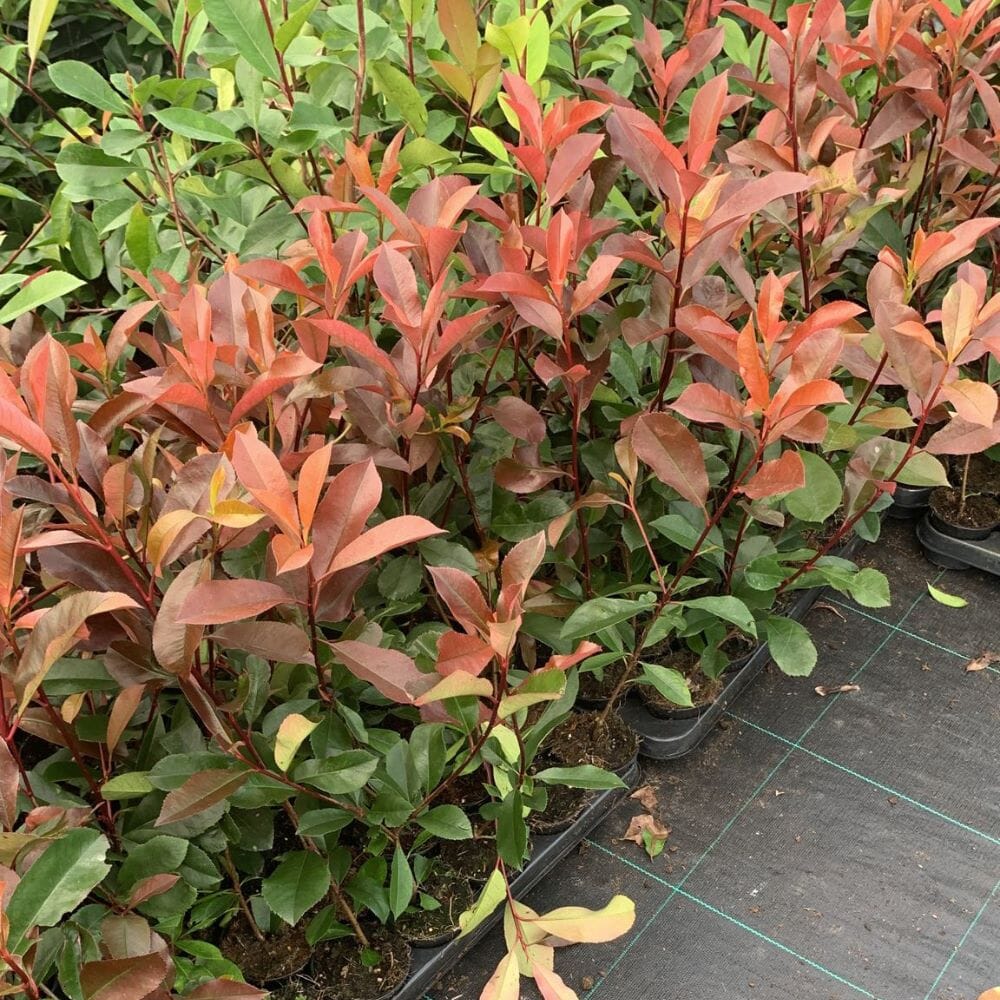
There’s a reason you see Photinia 'Red Robin' on so many British driveways and front boundaries. New leaves come through a brilliant fire-red that fades through copper to dark glossy green, and the cycle repeats with every flush of growth. Done well, it’s one of the most visually rewarding evergreen hedges you can plant. Done badly, it’s leggy, sparse at the base, and disappointing.
This guide covers how to get it right: which variety to choose, when to plant, how to space and prune for that signature red flush, and how it compares to laurel, leylandii and the other UK hedging options it’s often weighed against.
What is Photinia Red Robin?
Photinia x fraseri 'Red Robin' is an evergreen shrub bred from a cross between two Asian Photinia species. It was developed in New Zealand in the mid-20th century and has been the dominant photinia cultivar in UK gardens ever since.
Three things define it as a hedge plant:
- Red new growth. Every fresh leaf emerges glossy crimson before darkening to a deep green over several weeks. New flushes appear in spring and again in late summer if the plant is in good shape.
- Fully evergreen. Unlike privet or beech, Red Robin holds its leaves all year, giving you a consistent screen through winter.
- Glossy, broad-leaved appearance. It looks substantial — more of a “designed garden” plant than a country hedge.
It will eventually flower in late spring with small white clusters, followed by red berries, but most hedge-managed plants never bloom because trimming removes the flowering wood.
You’ll also see two related options:
- Photinia 'Little Red Robin' — a dwarf cultivar staying around 60-90cm. Useful for low formal hedging or container planting.
- Photinia 'Carre Rouge' — a French selection with even brighter, more sustained red colouring. A premium choice for accent planting.
Why Red Robin works as a hedge
The case for Photinia Red Robin comes down to four things:
The red flush is unmatched. No other UK-hardy evergreen hedge gives you fiery red new growth as a normal seasonal feature. Hard pruning at the right time can produce two or even three flushes in a year.
It’s fully evergreen. A solid year-round screen, important if your boundary needs to give privacy in winter too.
It tolerates hard pruning. You can cut Red Robin back to bare wood and it will resprout. This is what makes it possible to renovate an overgrown or leggy hedge.
It works at scale. Plants will reach 3-4 metres if you let them, so it’s a real option for tall screening, not just decorative low hedges.
When to plant Photinia Red Robin
Bare root (November to March)
Bare-root Red Robin is the most affordable option for hedges over 5 metres. Field-lifted while dormant, the plants establish quickly when planted between November and the end of March. Bare-root photinia is less commonly stocked than bare-root privet or laurel — order ahead.
In Scotland and northern England, aim for the later end of the season (February-March) when soil is starting to warm. Photinia roots will sit and do nothing in cold wet soil through the depths of winter.
Rootball (November to April)
Rootball Red Robin gives you larger, more established plants than bare root, with the rootball wrapped in hessian for transport. A good option when you want immediate visual impact at a lower cost than full pot-grown stock.
Pot grown (any time of year)
Pot-grown Red Robin is the most flexible option and the only sensible choice outside the bare-root window. Plants come in heights from 20-30cm dwarf forms up to 90-120cm screening sizes. Plant any month of the year provided you can water through the first summer.
How to space Photinia Red Robin
The standard spacing for a Red Robin hedge is 2-3 plants per metre, equivalent to 35-50cm between plants. Red Robin has a wider natural habit than privet, so it doesn’t need the tight 30cm spacing privet uses.
For a denser, faster screen, plant at 2.5-3 plants per metre. For a more open ornamental effect or where you want individual plant character to show, 2 plants per metre is enough.
Tall hedges (over 2 metres) benefit from slightly tighter spacing to compensate for the inevitable thinning at the base over time.
How to plant: the short version
- Dig a trench, not individual holes. 50cm wide and 40cm deep is generous and gives the roots a continuous run.
- Improve the soil. Photinia prefers well-drained, slightly acid to neutral conditions. Add compost or well-rotted manure to the trench, plus grit if your soil is heavy clay.
- Plant at the original soil mark. Don’t bury the stem — rot at the collar is a real failure mode for photinia.
- Firm in well and water. Even winter plants need a good initial soak to settle the roots.
- Mulch heavily. A 5cm layer of bark or compost over the trench retains moisture, suppresses weeds, and feeds the plants slowly as it breaks down.
- Stake if exposed. Larger pot-grown plants in windy locations should be staked for the first year to prevent root rock.
In the first season after planting, expect new growth to be green rather than red — the colourful flush is a function of mature, established plants. The red comes through properly from year two onwards.
How to get the best red colour
This is what most people get wrong with photinia. The red flush is a response to pruning. Plants that are never trimmed will produce one weak flush in spring and then nothing for the rest of the year. Plants that are pruned correctly will flush red two or even three times in a season.
The rule is simple: prune after each flush has finished colouring up and darkened to green. This triggers the next flush.
Practically, this means:
- Early/mid spring trim to shape and remove winter damage. New red growth follows in 3-4 weeks.
- Mid-summer trim once the spring flush has fully darkened. Another red flush follows.
- Optional early autumn trim in milder areas, for a third late-season flush. Skip this in Scotland and northern England — it can leave soft growth vulnerable to early frost.
Don’t trim hard in late autumn or winter. Cold damage on freshly cut wood is the quickest way to set a photinia hedge back.
Photinia vs the alternatives
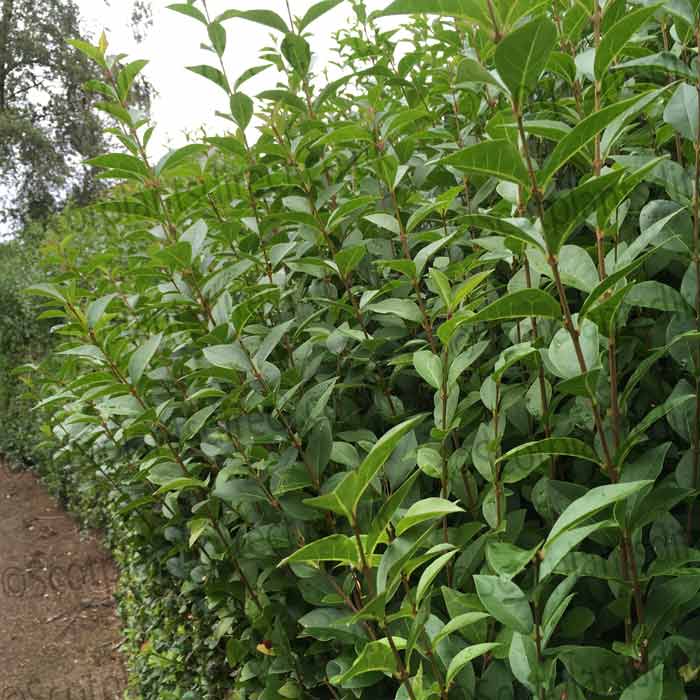
Photinia vs laurel. Laurel (cherry or Portuguese) is the closest competitor — both are broad-leaved evergreens with glossy foliage. Laurel is greener year-round with no red flush, but tolerates shade better and grows faster. Choose photinia for visual interest; choose laurel for deep shade or speed of establishment.
Photinia vs privet. Privet is cheaper, faster, and tolerates poorer soil. Photinia is more visually striking and fully evergreen. Privet for long boundaries on a budget; photinia for shorter feature hedges where appearance matters.
Photinia vs leylandii. Leylandii is faster and cheaper but visually plain and notorious for getting away from owners. Photinia is the slower but better-looking option that won’t get you into a dispute with your neighbours.
Photinia vs box. Box is a low formal hedge plant; photinia is a medium-to-tall screen. Different uses entirely. If you need a low evergreen hedge with character, look at Little Red Robin.
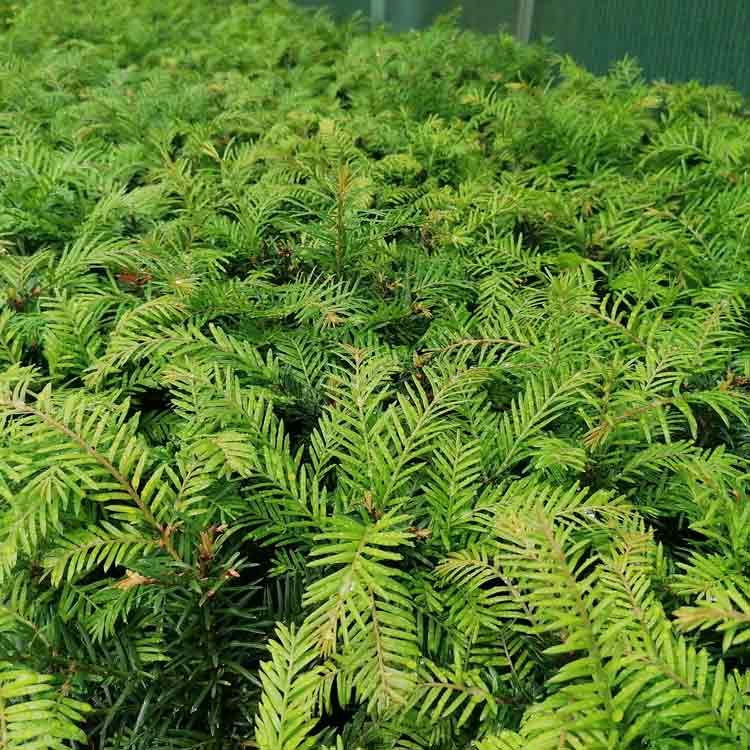
Photinia vs yew. Yew is the most formal of evergreen hedges, slow but exceptionally long-lived. Photinia is faster, more colourful, and shorter-lived (a well-managed photinia hedge lasts 20-30 years; yew can last centuries). Choose yew for heritage and formality, photinia for impact and speed.
The honest trade-offs
Leaf spot. Photinia is susceptible to Entomosporium leaf spot, particularly in damp humid conditions. Good airflow (don’t crowd plantings) and removing fallen leaves promptly reduce the risk significantly. Most cases are cosmetic, not fatal.
Soil drainage matters. Photinia hates wet feet. In heavy clay or low-lying areas, raise the planting beds or improve drainage before planting. Skip photinia entirely if your soil sits waterlogged in winter.
Cold tolerance has limits. Red Robin is hardy across most of the UK but can take leaf damage in severe cold snaps, particularly in exposed sites in Scotland and northern England. Damaged leaves are replaced by spring growth.
Slower than its reputation suggests. A photinia plant grows around 25-30cm a year once established. Privet and leylandii are noticeably faster. If you need a 2m screen in 2 years, photinia isn’t the right choice; if you can wait 4-5 years, it is.
It’s hungry. Photinia benefits from an annual feed with a balanced fertiliser in spring. Without it, growth slows and the red colour weakens.
Choosing your photinia
For most UK gardens, the choice comes down to:
- Pot-grown Red Robin (90-120cm) — the standard hedging size. Plant any time of year, gives you immediate hedge presence.
- Bare-root Red Robin — the budget option for hedges over 5 metres, ordered between November and March.
- Rootball Red Robin (90-150cm) — a middle ground: bigger than bare root, cheaper than pot grown, planted November to April.
- Little Red Robin — for low hedges (60-90cm) and edging.
- Carre Rouge — for accent planting where you want the most intense, sustained red colour.
Ready to order
Browse our full range of pot-grown Photinia Red Robin in sizes from 20-30cm dwarf forms up to 90-120cm hedging plants, or our rootball Photinia Red Robin for larger plantings between November and April.
For more on planting season, see our guide to privet hedging or browse our bare-root hedging range, and compare native options in our hawthorn hedging buyer's guide.
Delivery is calculated at checkout, based on order size and destination. Questions? We’re a working Scottish nursery — get in touch and we’ll help you pick the right plants for your project.