

The complete UK buyer's guide to hornbeam hedging (Carpinus betulus)
Hornbeam is the hedge you plant when beech won’t work. It looks remarkably similar — both are native British deciduous hedges that hold their dead leaves through winter (marcescence) — but hornbeam thrives in conditions where beech sulks. Wet clay, heavy ground, exposed sites, north-facing positions: hornbeam handles all of them. For a huge swathe of UK gardens, hornbeam is actually the right choice even when people instinctively reach for beech.
This guide covers what you need to know before ordering: why hornbeam is so often the better answer, when to plant, how to space and prune, and exactly when to choose hornbeam over beech.
What is hornbeam?
Carpinus betulus — European hornbeam or common hornbeam — is a native British deciduous tree in the birch family (not, despite the name, related to beech). It grows naturally in lowland English woods, particularly on heavy clay where beech struggles. Trimmed as a hedge, it’s content to be kept anywhere from 80cm to 4 metres.
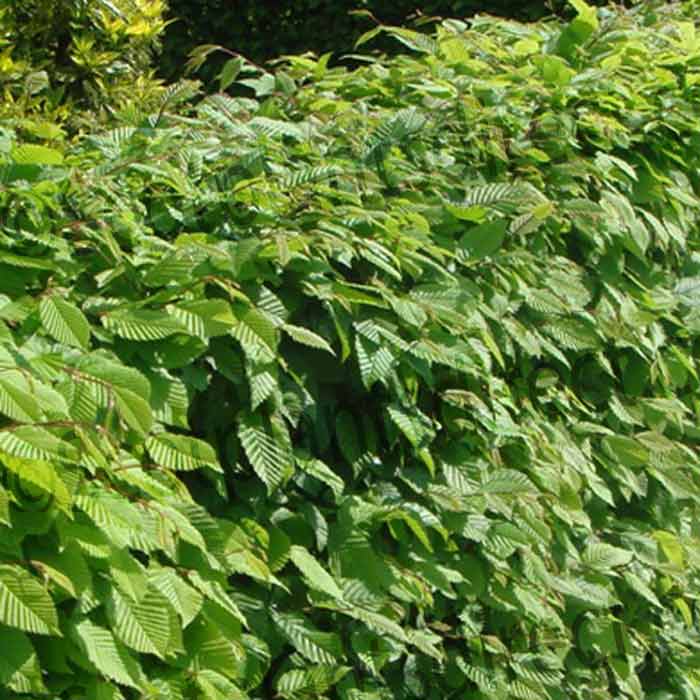
The leaves look superficially like beech — oval, pointed, deep green — but on closer inspection are more deeply furrowed with serrated edges, and slightly tougher in texture. In autumn they turn a butter-yellow to golden-orange (rather than beech’s copper-russet), fading to a paler brown that holds through winter on trimmed hedges.
Hornbeam wood is famously hard. It was historically used for ox yokes, butchers' blocks, and the moving parts of windmills — anything that needed to take repeated impact without splitting. As a hedge, the same toughness means it tolerates aggressive pruning and exposure that would damage softer species.
Why hornbeam earns its place
Five characteristics put hornbeam ahead of beech and most other deciduous hedges in many situations:
It handles wet ground. This is the headline. Hornbeam is the only deciduous-marcescent hedge that genuinely thrives in clay, heavy soil, or low-lying ground that holds water in winter. Beech on these soils dies back or sulks for years. If your ground sits sodden between November and March, hornbeam is your plant.
It holds winter leaves. Like beech, trimmed hornbeam hedges keep their dead leaves through winter, dropping them only when new spring growth pushes them off. Visual interest and partial screening through the months when most deciduous hedges go bare.
It tolerates exposure. Hornbeam handles wind, frost pockets, and exposed sites better than beech. Excellent choice for Scottish gardens, northern England, and any site where conditions are harsher than average.
It tolerates hard pruning. Like beech, hornbeam can be cut back to bare wood and will regrow. A neglected hornbeam hedge is not a write-off.
It’s a native British species. Excellent for wildlife — supports many insect species, provides nesting cover for birds, and produces winged seeds that finches and hawfinches feed on.
When to plant hornbeam
Hornbeam follows the same planting calendar as beech — bare-root and rootball November to April, pot-grown any time of year.
Bare root (November to April)
Bare-root hornbeam is the most economical option for hedges over 5 metres. Plants are lifted from the field while dormant and despatched without compost. The best value per metre, but order ahead — bare-root hornbeam is in growing demand and can sell out by mid-winter.
In Scotland and northern England, aim for the later half of the window (late February through April) for the most reliable establishment.
Rootball (November to April)
Rootball hornbeam gives you larger, more established plants than bare root. Useful when you want immediate visual impact but don’t want to pay pot-grown prices.
Pot grown (any time of year)
Pot-grown hornbeam can go in any month provided you can water through the first summer. The only sensible option outside the dormant window.
How to space hornbeam
The standard spacing for a single-row hornbeam hedge is 3 plants per metre, or 30-35cm between plants. This gives a dense, knit-together hedge within three to four seasons.
For a taller, denser, wind-breaking hedge, plant in a double staggered row at 4-5 plants per metre. Worth it for tall screening on exposed sites where hornbeam excels.
For low formal hedging (under 1 metre), tighten to 4 plants per metre.
Hornbeam is sometimes used for pleaching — the formal technique of weaving young whips together to create a “stilted hedge” or “hedge on legs”. For pleached hornbeam, plant young straight-stemmed plants at 2-3 metre intervals on a single line and train horizontally as growth develops.
How to plant: the short version
- Prep a trench, not individual holes. 40-50cm wide and 30-40cm deep gives the roots a continuous run.
- Soil prep is forgiving. Hornbeam tolerates a wider range of soils than beech — clay, heavy ground, slightly alkaline or acid, all fine. On extremely compacted clay, fork through to break it up. Adding compost is welcome but not essential.
- Plant at the original soil mark. Don’t bury the stem.
- Firm in well. Bare-root plants in particular need tight soil contact — heel the soil down with your boot.
- Water in thoroughly. Even in cold wet weather, a good soak helps settle soil around the roots.
- Mulch. A 5cm layer of bark, compost or well-rotted manure suppresses weeds and retains moisture.
After planting, cut the top third off bare-root plants. This counter-intuitive step is what triggers low branching, the secret to a hedge that doesn’t go bare at the base.
Trimming and ongoing care
Hornbeam needs one trim a year once established — late summer, typically August. Same rule as beech: don’t trim in autumn/winter (you’ll lose the russet winter leaves), don’t trim in spring (you’ll lose the new growth).
In the first two years, prune lightly to encourage thick basal growth. Don’t worry about height yet — the priority is filling in at the base.
A spring feed with a balanced fertiliser supports the spring flush. Annual mulch keeps soil structure healthy. Hornbeam is otherwise extremely low-maintenance — it’s the kind of hedge you can plant and largely leave alone.
Hornbeam vs the alternatives
Hornbeam vs beech. This is the key comparison, since the two look superficially identical. Hornbeam wins on wet/heavy soil; beech wins on dry/free-draining soil and has slightly more vivid copper winter colour. If your soil is good loam, beech is marginally more refined. If your soil is anything else — clay, heavy, low-lying, exposed — hornbeam is the answer. When in doubt, hornbeam handles a wider range of UK conditions.
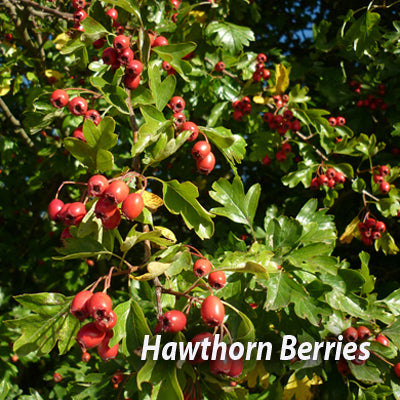
Hornbeam vs hawthorn. Both native, both tolerate heavy soil. Hawthorn is thorny (security/stockproof), grows faster, has spring blossom and autumn berries — a working farm hedge. Hornbeam is non-thorny, slower, more refined — a garden hedge. Use hawthorn for boundaries with livestock, hornbeam for ornamental garden screening.
Hornbeam vs yew. Yew is fully evergreen and exceptionally formal; hornbeam is deciduous (with winter leaves) and gives seasonal character. Yew lives for centuries; hornbeam is a long-lived hedge but not in yew’s league. Choose yew for formal architecture, hornbeam for naturalistic seasonal hedging.
Hornbeam vs laurel. Different visual languages entirely. Laurel is fully evergreen with large glossy leaves — a “tropical” feel. Hornbeam is deciduous-with-marcescence and gives the classic English countryside look. Soil matters too: hornbeam handles wetter conditions than laurel.
Hornbeam vs leylandii. Hornbeam is slower but enormously more refined and longer-lived. Leylandii will give you 2m in two years; hornbeam gets there in five. If you can wait, hornbeam is always the better choice for ornamental work.
The honest trade-offs
It’s slower than people expect. Hornbeam grows 30-45cm per year once established — respectable but not fast. Plan for 4-5 years to reach a 2m hedge from bare-root plants.
Winter screening isn’t full. Russet leaves give visual interest and partial screening through winter, but they’re not a solid privacy wall. If you need full year-round privacy, choose an evergreen.
Spring leaf drop. Winter leaves come off only when new growth pushes them, which means a pile of brown leaves at the base of the hedge in April. Compostable, but worth knowing.
Bare-root window is short. Miss November-to-April and you’re paying pot-grown prices for that planting season.
Choosing your hornbeam
For most UK gardens, the choice comes down to:
- Bare-root Hornbeam (60-80cm or 80-100cm) for the best value on longer hedges, planted November to April
- Larger bare-root sizes (100-125cm or 125-150cm) for immediate impact at modest cost premium
- Pot-grown Hornbeam for any time of year, shorter runs, or if you’ve missed the bare-root window
- Rootball Hornbeam for the middle ground between bare-root affordability and pot-grown size
Size to buy depends on impatience and budget. Smaller bare-root plants (40-60cm) are cheapest per metre and establish fastest. Larger plants give immediate hedge presence at higher cost.
Ready to order
Browse our full range of Hornbeam (Carpinus betulus) hedging plants, available bare-root in winter and pot-grown for year-round planting.
Considering alternatives? Compare with our beech hedging buyer's guide if your soil is well-drained, or our hawthorn hedging for thorny native screening. For more on planting season, browse our full bare-root hedging range, or compare native species in our hawthorn hedging buyer's guide.
Delivery is calculated at checkout, based on order size and destination. We’re a working Scottish nursery — happy to talk through soil type and species choice before you commit. If you have heavy or wet ground, hornbeam is almost always the right answer.
%20%E2%80%94%20but%20hornbeam...)